

As conservative voices call for assimilation, the worlds most successful nations are thriving because of multiculturalism, not in spite of it.Ana Pararajasinghamwrites.
FOR DECADES, conservative criticsfrom Washington to Canberrahave railed against multiculturalism, insisting that national unity depends on assimilation.
One of the loudest voices is theHeritage Foundation, a Washington-based think tank that routinely calls for the dismantling of multicultural policies. Closer to home, former Australian Prime MinisterJohn Howardechoed similar sentiments. In arecent interview,he admitted he was never comfortable with multiculturalism and dismissed the idea that all cultures are equal as nonsense.
But heres the glaring truth: multiculturalism is not what is holding our nation back; its whats propelling countries like Australia and Canada forward. Nations that rejected it like Japan are now struggling with demographic and economic stagnation. Much of Europe is trending the same way.
To dismiss multiculturalism today is not only shortsighted but also wilful denial. It clings to an outdated worldview that no longer reflects the vibrant and diverse reality of modern Australia. Multiculturalism is no longer something we politely acknowledge or reluctantly tolerate. It is central to who we are. It shapes our arts, informs national conversations, and is increasingly defining the future of countries like Australia, Norway, Switzerland, the United Kingdom and Canada.
Racism, assimilation and the need for a culturally-diverse nationDiverse cultures should not be suffocated by requiring migrants to assimilate into Australia, argueswritesGerry Georgatos.
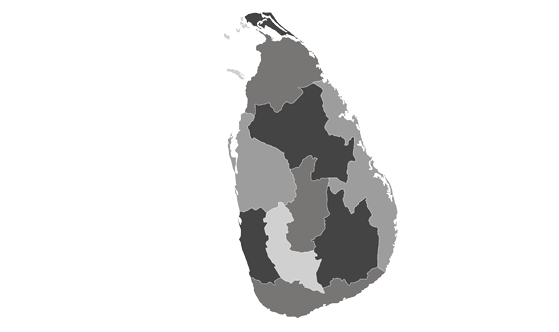
This became especially clear to me while researching my book, Uprooted. This project was born from a desire to document the stories of those forced to flee their homelands who have gone on to thrive in their new countries. My focus is the Sri Lankan Tamil diaspora,uprooted by decades of conflict and scattered across continents since the 1950s. Despite trauma and dislocation, many have not only rebuilt their lives, but they are thriving. Theyve integrated, contributed and helped redefine what it means to belong.
Lets look at Australia. In 2023, the Miles Franklin Literary Award our nation's most prestigious literary honour was awarded toChai Time at Cinnamon Gardens, a novel set in a Tamil retirement home. A Tamil-Australian story was recognised as best reflecting Australian life. Then theresCounting and Cracking, an epic play tracing three generations of a Tamil family across Sri Lanka and Australia. It swept major literary awards and was declared the best Australian play of the 21st Century byArtsHub.
In Norway, the Tamil rock band9 Grader Nord,led by sisters Mira and Dipa Thiruchelvam,won the 2023 Spellemannprisen, Norways equivalent of the Grammys, for their album Yalpanam. Their earlier album Jaffna had already won the Subjektprisen for its unique blend of folk-rock and Tamil rhythms.
In Switzerland, Echoes of Roots,a Tamil womens dance troupe, will represent the country at the2024 World of Dancecompetition. Their routine fuses Bharatanatyam and koothuclassical and folk Tamil dance forms.Anton Ponrajah, who arrived as a refugee in 1985, is now a celebrated actor in Swiss-German theatre and was honoured by the City of Lucerne for his contribution to the arts.
In the UK, comedianRomesh Ranganathanuses his Sri Lankan Tamil-British identity to brilliant comedic effect, winning the prestigious BAFTA awards in 2020 and 2021.
How to change the face of intergenerational racism in AustraliaAustralia's history of racism and oppression must be fought against, with lessons to be learned from shifting paradigms around the world.
MusicianM.I.A.,once vilified for her politics,was appointed MBE in 2019.Danny Sriskandarajahis a former CEO ofOxfam in Britainand now the head of theNew Economics Foundation. He is also a regular voice onBBCs biggest platforms, includingToday,Hard Talk, andQuestion Time.In Canada,Gary Anandasangaree, once a ten-year-old Tamil refugee, now serves as Minister of Public Safety in Prime MinisterMark Carney'sgovernment.Roy Ratnavel'sbestselling memoirof escape and survival tells a bigger story: of belonging. As heputs it: He is an accidental Sri Lankan by birth, an unapologetic Tamil by heritage, and a proud Canadian by choice.This is a ringing endorsement of multiculturalism.
These are not fringe stories. These individuals are not clinging to the edges of society; they are shaping it. Their identities are layered yes, they are Tamil, but also fully Australian, Swiss, Norwegian, British, or Canadian. They are not in conflict with their adopted countries they enrich them.
What Ive learned from the Sri Lankan Tamil diaspora may well apply to other uprooted communities: Hazaras, Kurds or others. When people are welcomed, they dont just assimilate, they elevate.
Multiculturalism works. And we should be thankful it does.Because whether were ready or not, the 21st Century will be shaped by migration on a scale weve never seen before. Wealthy nations with ageing populations will depend on newcomers,from Asia, Africa, and the Middle East,who are ready to move, contribute, and belong.
The future isnt monocultural. Its diverse, dynamicand already here. Its time our thinking caught up.
Ana Pararajasinghamis a writer who served as Director of Programmes at the Centre for Just Peace and Democracy (CJPD).
Related Articles
- Amid the world's upheaval, Australia is still the lucky country
- Racism, assimilation and the need for a culturally-diverse nation